Interview
UNRWA on Gaza after the ceasefire: ‘A combination of hope and despair’
Two months into a fragile Gaza ceasefire, the main UN agency on the ground described a mixed picture of conditions in the decimated Strip.
In an exclusive interview with EUobserver, Marta Lorenzo, the director of the UNRWA office in Brussels, summarises in two words: “a combination of hope and despair”.
“There is a little bit of hope that the ceasefire is going to bring stability and peace … [but] the conditions on the ground have not changed much for people,” she said.
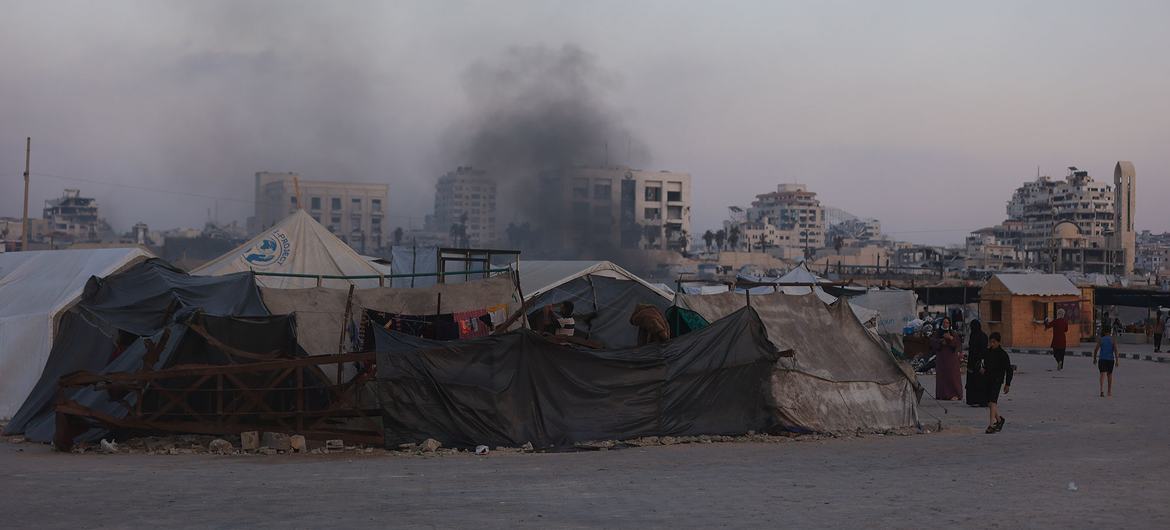
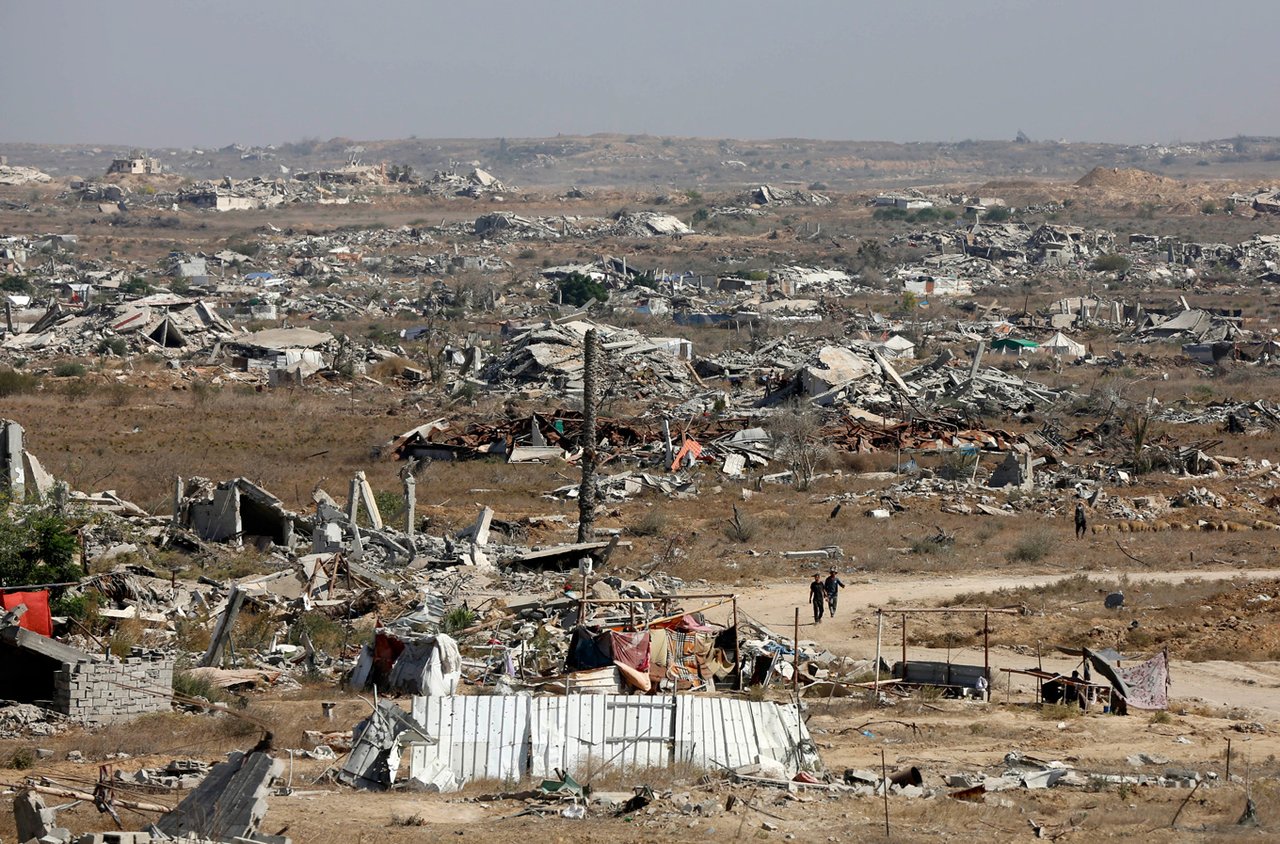
Gaza still lies in ruins and, despite the ceasefire, people are still being killed, but not in numbers to make headlines.
Gaza’s ministry of health says 360 Palestinians have been killed and 922 injured since the ceasefire entered into force on 10 October.
Many families displaced during the winter floods continue living in tents, often with “water up to their knees and once again losing absolutely everything.”
While more supplies are entering Gaza, the entry of some goods has not yet translated into improved living conditions. Commercial items are visible in markets, but many people simply cannot afford them.
UN humanitarians can move more freely now that fighting has reduced, enabling them to collect waste, distribute water, and repair damaged systems.
'To bring someone who was suffering from malnutrition back to normal, you need sustainability, consistency, and an enabling environment'
“Something is changing, but not fast enough to be able to have a very big impact on people,” Lorenzo said, explicitly pointing to the severity of malnourishment documented across the Strip during the Israeli blockage.
“To bring someone who was suffering from malnutrition back to normal, you need sustainability, consistency, and an enabling environment,” she added.
On humanitarian access, she notes that aid is still partially blocked. “For UNRWA specifically, we are not managing to get through the supplies that we have in Jordan.” But simply counting trucks, she stresses, “dehumanises people,” reducing them to survival needs alone rather than restoring their ability to resume life.
One key change is geographical. “Gaza has become smaller,” she said, referring to the constantly shifting “yellow line” demarcating Israeli military zones.
The "yellow line" marks the Israeli military's redeployment border under the first phase of the ceasefire agreement between Israel and Hamas, brokered by US president Donald Trump.
But Israel redefined the “yellow line” as the “new border,” the country’s military chief said earlier this week.
More than 100 UNRWA installations fall within these restricted areas. “Some of those installations are not accessible, which is a pity, but it doesn’t prevent us from working in the places where we are.”
The next phase
Asked about the ceasefire’s fragility and reported violations, she says international diplomatic pressure is intense. “I think there are lots of efforts being put by everybody to make sure that it holds and to make sure that we are able to move to the next phase.”
But she cannot explain why Israel is not allowing a full scale-up of humanitarian aid.
She notes the International Court of Justice’s advisory opinion stressing Israel’s duty to facilitate humanitarian work, including UNRWA’s — something very difficult by recent Knesset legislation restricting UNRWA’s contact with Israeli authorities, affecting work in Jerusalem.
“If you want to move to phase two of the ceasefire, you need to move into early recovery and eventually reconstruction. And right now we don't have the conditions for early recovery or reconstruction,” Lorenzo told EUobserver.
As of 2 December 2025, 947 incidents have affected UNRWA infrastructure and people, with 312 installations hit, some of them multiple times. At least 851 people sheltering in UNRWA buildings have been killed and 2,573 injured since the conflict began.
Overall, over 300 UNRWA personnel, alongside 73 people who were supporting UNRWA activities, have been killed since the war began. “These are not numbers, these were my colleagues,” Lorenzo said.
The latest incident occurred early on Monday, when Israeli police and municipal officials forcibly entered the UNRWA compound in East Jerusalem, cutting communications, seizing property, and replacing the UN flag with an Israeli one.
"EU partners must be able to fulfil their essential mandate, in line with international law and UN resolutions," EU commissioner Hadja Lahbib said on X, responding to the news.
"Such actions set a dangerous precedent for blanket disregard of international law ... Israel must uphold its obligations under the convention on the privileges and immunities of the UN, which guarantees the inviolability of UN premises," also said the European Parliament Delegation for relations with Palestine.
‘A war on disinformation’
Meanwhile, a disinformation campaign has been unfolding to undermine the credibility of UNRWA.
“We were fighting two wars: the war in Gaza and then the war on disinformation,” she said, pointing to false allegations coming from the media and the Israeli authorities, which have also been echoed by the US administration.
These include claims that dozens of staff members belonged to Hamas, which triggered several countries to suspend their funding in 2024, amounting to around $450m.
The UN’s internal oversight office said in August 2024 that the evidence was “insufficient” to prove the allegations from the Israeli government, although nine staff members were deemed potentially implicated and subsequently dismissed.
'We were fighting two wars: the war in Gaza and then the war on disinformation'
“It is very difficult for us as a UN organisation to deal with such a harsh disinformation campaign,” she also said.
“We are fully committed to implementing our neutrality framework, and we are doing it … otherwise the EU, which is our largest partner, would not have disbursed the funding,” Lorenzo said.
Back then, the EU Commission put conditions on the disbursement of funds. In 2025, EU funding committed to UNRWA, totalling €82m, was fully disbursed over the summer, alongside €150m for the Palestinian Authority, which is currently facing a fiscal deficit.
“In 2025, the commission did not establish new conditions to EU funding to UNRWA, which showed continued capability to deliver its services, despite the legal and operational challenges,” said EU commissioner Dubravka Šuica.
For its part, the US cut all its funding, stripping the agency of roughly one‑third of its annual budget and forcing austerity measures, which have triggered the terminations of contracts with over 800 people, explained Lorenzo.
“UNRWA budgets not based on needs but based on what we think we will receive,” she explained — and that amount has now fallen back to 2012 levels. “Having lost this important source of funding has put us in a very fragile situation."
Beyond Gaza, she describes a region defined by “uncertainty”: instability in Syria, fragile ceasefires in Lebanon, and deep concern in Jordan, home to 2.3 million Palestinian refugees. UNRWA’s services, she argued, are essential to preventing further regional destabilisation.
Divided EU
The EU welcomed the ceasefire and Trump's peace plan but stressed implementation is key, given Israeli violations not only in Gaza but also in the West Bank.
“Everybody welcomed the ceasefire and the peace plan, now we need to also make it work in practice, and it is not working the way it should be,” EU foreign affairs chief Kaja Kallas told MEPs earlier this week.
Kallas also said that the proposal for sanctions against Israel remains on the table, although there are deep divisions among member states. “We concentrate on those things where we agree, like the humanitarian aid getting in”.
After two years of war in Gaza, more than 70,000 Palestinians have been killed and over 170,000 injured. Israel’s military operation followed the Hamas attacks on 7 October, which killed around 1,200 people in Israel and led to about 250 hostages being taken.
European leaders meeting in Brussels on 18 December are expected to call on Israel to halt a controversial NGO registration law, release withheld Palestinian revenues, restore banking links, curb settler violence, reverse settlement expansion, and comply with international law, according to draft conclusions seen by EUobserver.
Notably, however, there will be no mention of the need to allow international journalists in Gaza, a situation which Lorenzo deemed "unacceptable".
"If there are so many allegations, I would say, on humanitarian workers, let somebody else investigate. Let international media go and see how we do our humanitarian work, how we distribute supplies, which checks and balances we have in place. There is no better way," she said.
Every month, hundreds of thousands of people read the journalism and opinion published by EUobserver. With your support, millions of others will as well.
If you're not already, become a supporting member today.
Author Bio
Elena is EUobserver's editor-in-chief. She is from Spain and has studied journalism and new media in Spanish and Belgian universities. Previously she worked on European affairs at VoteWatch Europe and the Spanish news agency EFE.