Newsletter
Secrecy Tracker: The EU’s plan to classify (almost) everything
Dear readers,
We are back with a new issue of the Secrecy Tracker – your regular update on what the EU institutions prefer to keep under wraps.
And we are ending the year with some dire news. The right to access documents in the EU is potentially coming to an end.
I am Nikolaj Nielsen, a reporter at EUobserver, who has for years struggled to gain access to EU documents. I wrote this edition, highlighting how a three-year-old bill proposed by the European Commission on information security could potentially make it near impossible.
This newsletter is a collaboration of Follow the Money, EUobserver, and Investigate Europe

In Joseph Heller's Catch-22, a low-ranking mail clerk named Wintergreen has an oversized grip on the flow of information.
His control is a wider commentary by Heller on the paradox of how classified information can be used to wield power within a bureaucratic system.
But Heller's satire of suppressing transparency to protect self-interest, rather than genuine security, has also now been coded into a new EU draft law.
"It will basically be the end of access to documents in the EU," says Shari Hinds of Transparency International EU, the Brussels-based advocacy group.
First tabled by the EU Commission in 2022, the Information Security regulation (Infosec) is inching its way through the European Parliament and the Council, which represents member states.
The commission insists new rules are needed to protect the EU from hybrid threats, while keeping information flowing between the EU institutions and its agencies.
At a hearing of the parliament’s civil liberties committee in September, a senior commission official said that the volume of both classified and non-classified material is on the rise, notably in areas such as defence and trade, while threats to its confidentiality, integrity and availability are multiplying.
In response, the commission wants a unified classification regime that mirrors the council’s restrictive internal practice, where even mundane papers are often stamped “limite”.
The council — where member states meet to discuss everything from Russian sanctions to labelling of food — has five levels of document security: LIMITE UE, RESTREINT UE, CONFIDENTIEL UE, SECRET UE and TRES SECRET UE.
LIMITE marks regular internal documents that are typically published later. Documents marked RESTREINT are sensitive, and leaking them could cost you your job.
Under Infosec, that classification would essentially be extended across all EU institutions and bodies, further obscuring how decisions are made on files ranging from energy to transport and at a time when defence contracts are exploding.
But the labelling system is only part of the problem.
The proposal also introduces a “need to know” test that would apply not only to classified documents, but to ordinary working papers that reveal nothing especially sensitive.
It means the burden of proof is being re-engineered so that one would have to prove they deserve to see even routine material. Any notion of transparency by default would effectively be gutted.
That is a radical break with existing EU access rules, and a further quiet transfer of power to a faceless administrative machinery run by low to mid-level officials (echoing the dark satire that underpins Heller's Catch-22).
The added obfuscation will hit not only journalists and civil society at large but possibly also domestic MPs in the EU member states.
German Green MP Anton Hofreiter, who is chairman of the EU committee in the Bundestag, warns that such constraints strike at the heart of parliamentary oversight.
Many national parliaments are uneasy with the draft, and debates are now slowly starting to pick up pace, he says.
Limiting access to EU documents risks undermining the democratic process, he also warns.
“We not only want to be involved in the end, but also during the ongoing process,” he says. “If you don’t have information on what’s going on, you cannot uphold the democratic process,” he adds.
Yet he remains hopeful the bill won't succeed in obstructing information flows.
Lena Düpont, his centre-right German counterpart in the European Parliament, is the lead MEP on the proposal and has essentially echoed the commission's stance.
"We need to find categories and procedures on sharing sensitive information, classified information, but also non-classified, less sensitive information, which is the basic aim of the proposal as such," she said in September.
But she also said that access rules on non-classified information must be safeguarded so that democratic debates remain accessible, while insisting on special exceptions for MEPs.
Amendments to her report have since been tabled, with a vote likely set to take place in the European Parliament's civil liberties committee sometime early next year.
Some of those amendments seek to remove the "need to know" principle and Infosec's new classification system.
They also seek to preserve the integrity of regulation 1049/2001, the current key EU legal framework governing public access to documents.
Article 9 of that regulation spells out what constitutes ‘sensitive’ information. And in contrast to Infosec, it also says institutions must provide reasons for a denial of access.
As for the council, the debates are also ongoing with both the French and the Dutch issuing warnings over the proposed restrictions on non-classified information.
By skewing the checks and balances that underpin any functional democracy, the commission may end up laying a foundation that widens the gap between the public interest and those vested by corporate greed.
Gaza: What, Where, Who?
For years, the commission has been asking the Israeli government to pay back the damages it caused to EU-funded infrastructure in occupied Palestinian territories.
Prior to the October Hamas attacks in 2023, the commission told the parliament that it tracks demolitions and confiscations of donor-funded structures, including EU-funded assets and related financial damage.
So presumably it would have information on the total value of EU-funded assets in Gaza.
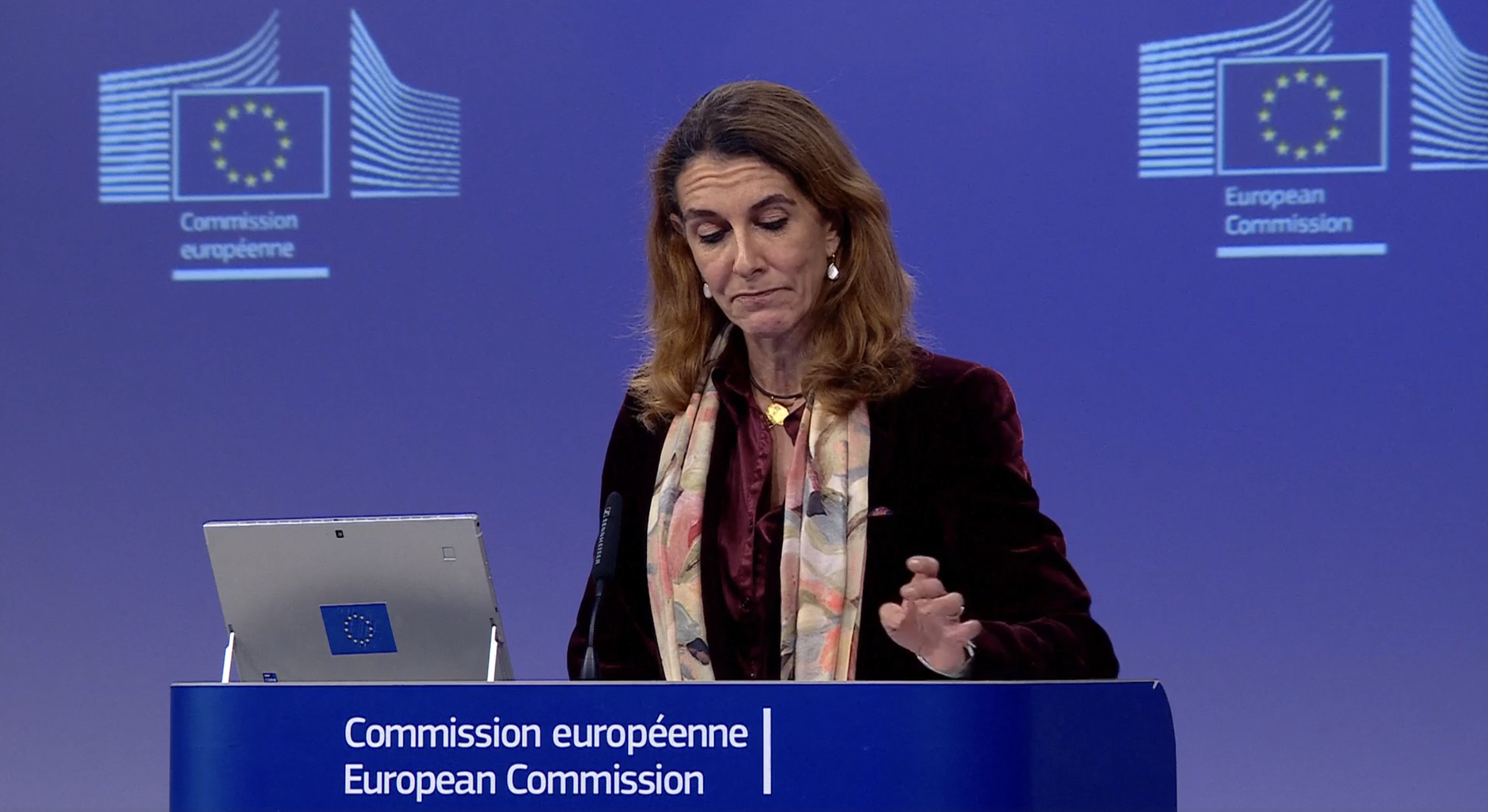
At a midday press briefing on 18 November, EUobserver asked the commission spokesperson whether it had ever demanded Israel also compensate it for damages to EU-funded installations destroyed in Gaza.
And in a separate message to their spokesperson, we also asked for the total value of EU-funded installations in the Strip up until October of 2023.
We have yet to receive any response, highlighting the political sensitivity over an issue that led to the firing of Gabriele Nunziati, a journalist for Agenzia Nova, for asking similar questions at the commission’s midday press conference.
Squeezing blood from stone
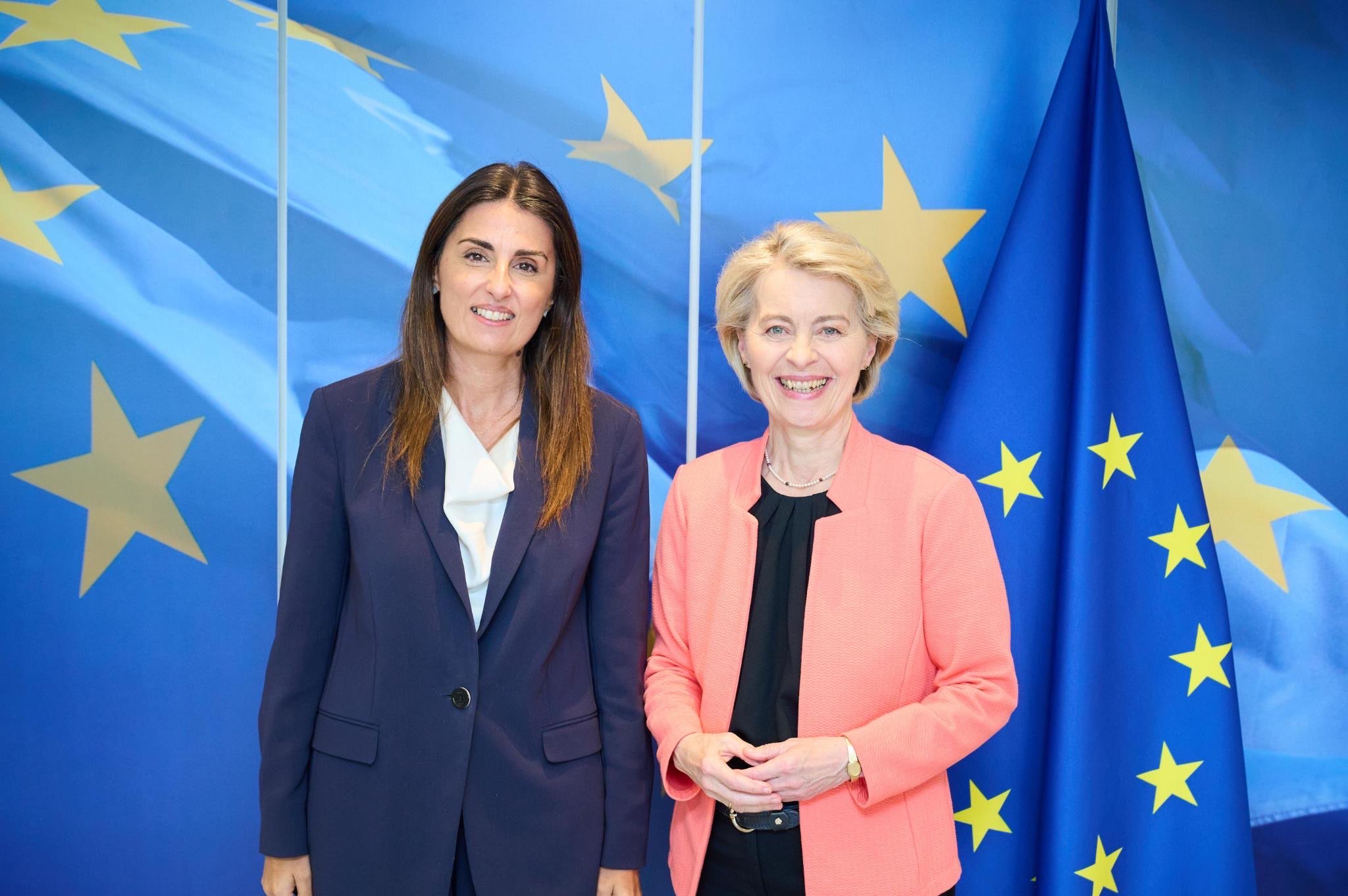
Some will say it’s like squeezing blood out of a stone. But Teresa Anjinho, who took up the job as the EU’s administrative watchdog earlier this year, has already faulted the commission for failing to carry out impact studies on legislative proposals. Anjinho said the Brussels-executive needs to guarantee at least a minimum procedural standard for law-making.
For its part, the commission argues the lower standards are needed as a matter of urgency.
But sloppy law-making has a way of finding itself challenged and drawn out in the courts, posing questions on whether the legislative expediency is mostly political appeasement to the United States.
Court orders preservation of Ursula von der Leyen emails, texts
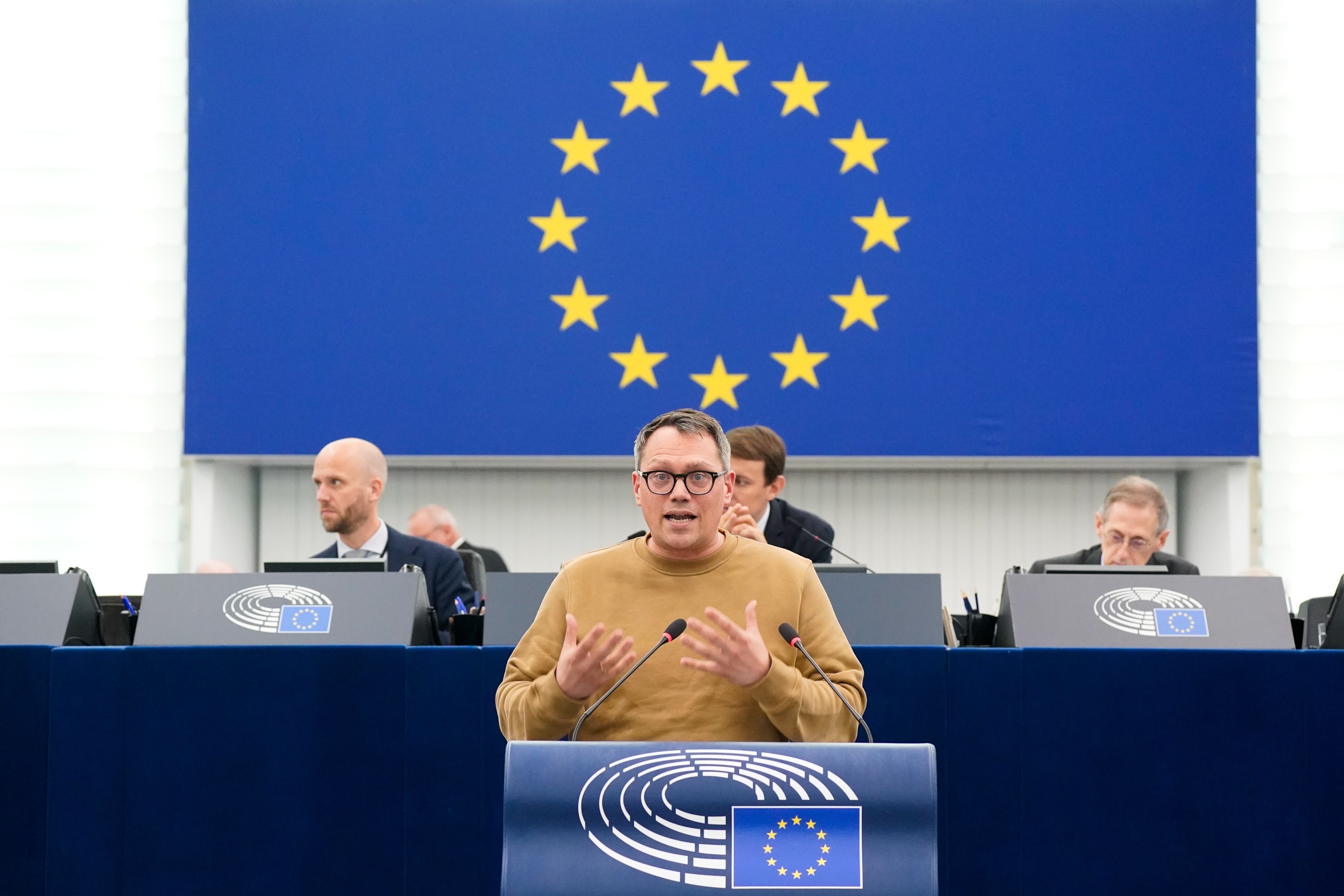
German social democrat MEP Tiemo Wölken has secured an order from the EU’s General Court against the commission to preserve emails and text messages of Ursula von der Leyen and her cabinet.
The commission chief decided earlier this year to withdraw a draft law on patents, which had drawn heavy criticism from the US tech industry, after a meeting with US vice-president JD Vance.
Wölken says that if the commission’s proposal was retracted under pressure from the US, “that would be a scandal”.
His lawsuit, filed at the court in September, seeks to uncover von der Leyen’s correspondence about the proposal. In parallel to Wölken’s legal action, the parliament has voted to bring a separate lawsuit against the commission in an attempt to reverse its withdrawal of the patents proposal.
“It is unacceptable that the EU commission is abusing its right to withdraw legislative proposals as a political tool to circumvent parliament”, Wölken said. “Von der Leyen can dispel these rumours [about a secret deal with Vance] by ensuring transparency.”
Aarhus Convention at risk
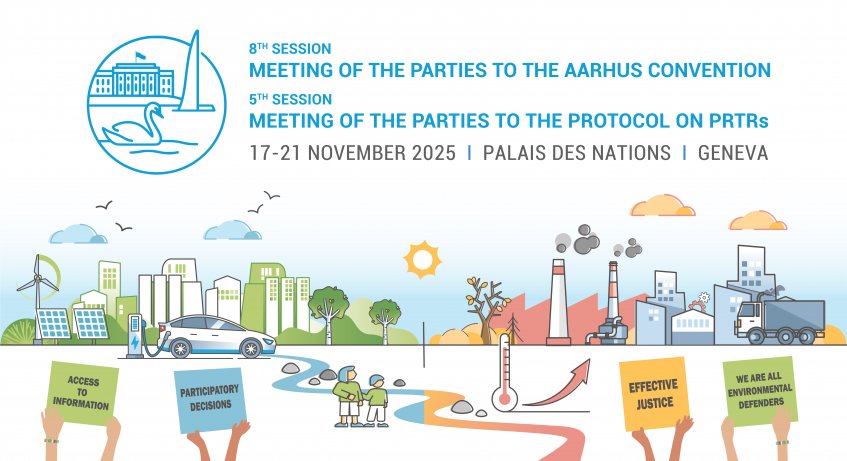
At the latest meeting of the Aarhus Convention’s parties, which took place last week, the commission and the UK tried to weaken the Aarhus Convention — an international framework that guarantees public access to environmental information, participation, and justice.
The Brussels executive pushed to appoint one of its own officials to the Convention’s Compliance Committee, a move widely seen as jeopardising its independence, before finally withdrawing the candidate.
In parallel, it tabled funding proposals that would effectively freeze the convention’s operations at a moment when its trust fund is already running critically low.
You can find the full analysis of professors Päivi Leino-Sandberg and Emily Barritt here.
If you come across any good examples of EU institutions dealing with transparency (or failing to!), let us know! And stay tuned for our next newsletter coming in early next year.
For any suggestions, examples, or complaints, email: [email protected], [email protected], [email protected], [email protected], [email protected]