Newsletter
94 days to election: Hungarian government brands opposition's Magyar 'mentally ill'
In this new weekly series, award-winning journalist Veronika Munk summarises and explains the most important public affairs developments from Hungary.
We accompany readers along the historic road to the April 2026 election — a contest without precedent in the region over the past decade and a half. This week, we cover:
1. A campaign debate sliding into personal attacks after Péter Magyar, without evidence, warned of secret-service operations and staged self-attacks
2. International press conference: only one question could be asked of Orbán
3. The ruling party unveiling its new Budapest candidates
4. The Slovak Beneš decrees — and the prospect of prison sentences — becoming a Hungarian political issue
5. A Venezuelan U-turn: after years of cordiality, the government welcomes Nicolás Maduro’s fall
6. The death at 70 of Béla Tarr, one of contemporary cinema’s most important and radical figures
Follow Hungary’s road to the 2026 election — subscribe to Days Until the Hungarian Elections on Substack and get every edition straight to your inbox.
Magyar: There will be staged attacks. Government: you are 'mentally ill'
Péter Magyar — whose party has, according to opinion polls, been consistently leading Viktor Orbán and the ruling Fidesz party for a year — claimed in his New Year’s address that he had information suggesting that figures within the incumbent government could seek to sow panic around election time through staged self-attacks, drones flown into crowds, or falsified recordings. But he offered no evidence.
On Tuesday (6 January), he added that he was making the information public because, if those in power know the opposition is aware of their plans (“they know that we know what they know”), they may be less likely to carry them out.
At Thursday’s (8 January) weekly government press briefing, the minister heading the prime minister’s office, Gergely Gulyás, responded to Magyar’s theory by saying: “Several members of the government have noticed that Péter Magyar is mentally ill”.
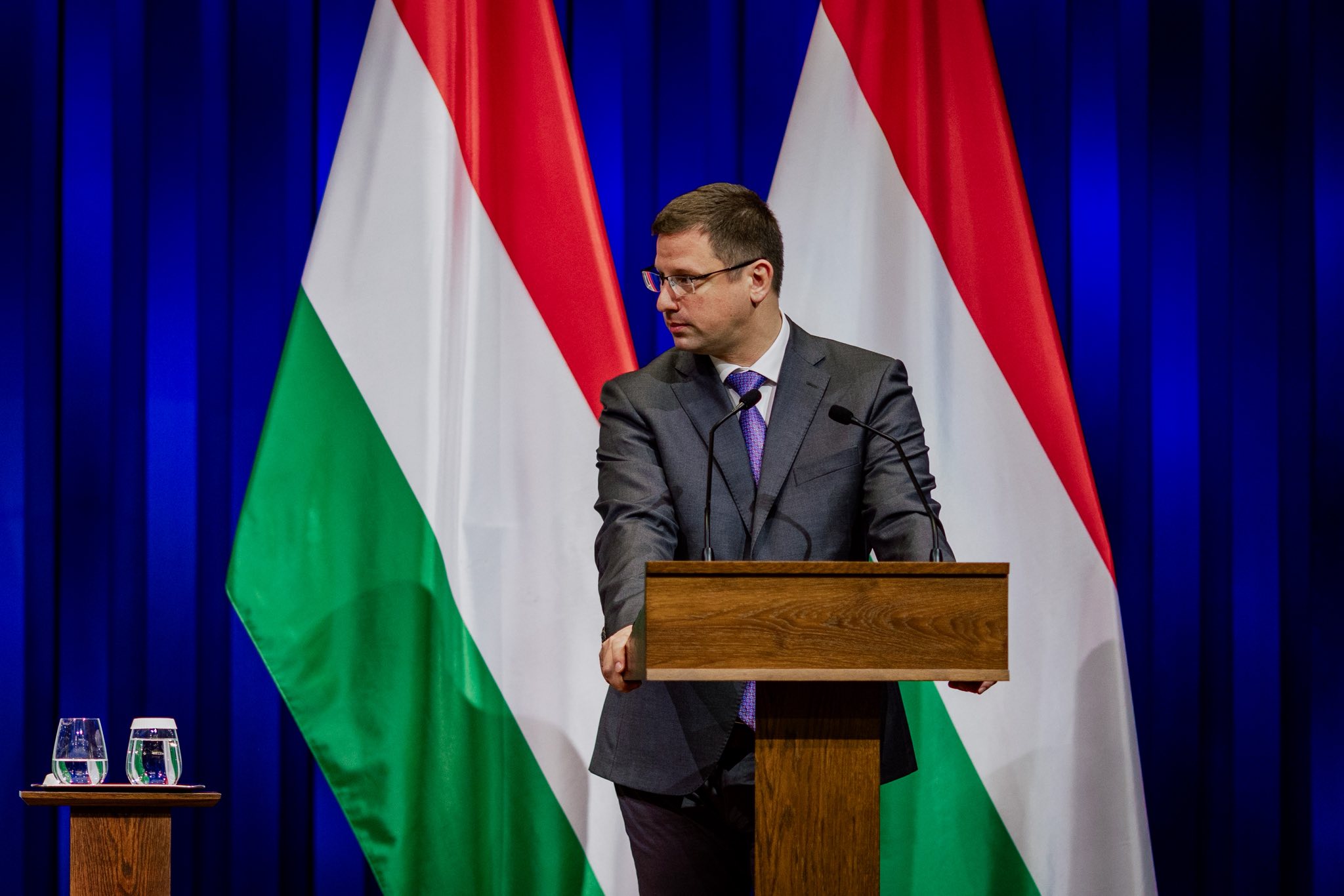
Orbán opens the year with an international press conference, then Magyar follows suit
In Hungary, it is a major event when the prime minister answers questions live on air — not just from friendly interviewers but also from representatives of the independent media.
Orbán's year-opening international press conference was trailed with the promise that “no question will go unanswered”. In practice, it was a tightly controlled event.
Journalists were allowed to ask only one question each, with no follow-ups, leaving no room for meaningful dialogue.
The prime minister used the format to speak at length on his preferred topics, while either ignoring or answering only very briefly the more sensitive issues.
The illusion of openness was further undermined by the selective choice of questioners. The introduction noted that 63 media outlets were present and around 100 people sat in the room, yet several critical domestic outlets (including Partizán, with a reach in the millions) were not allowed to participate.
Of the 28 journalists allowed to ask questions, 14 represented Hungarian media, and eight of them work for pro-governmental outlets.
Even among the international segment, a conspicuously high share was of friendly rightwing journalists plus a representative of Chinese state media was present.
As a result, Orbán once again had ample space to rehearse his familiar talking points on migration and the “decline of Brussels”. Although he later wrote on Facebook that “everything has been answered,” that claim was itself a considerable exaggeration.
Very little genuinely new information emerged, with two exceptions:
1) Since October, Orbán has repeatedly floated the idea that Budapest could host a Putin-Trump summit that might bring the full-scale invasion of Ukraine to an end. Asked whether such a meeting would actually take place, he replied: “I don’t want to venture into predictions.”
2) Returning from the United States in early November after meeting Donald Trump, Orbán had already announced on the plane that Hungary could expect a massive financial “protective shield” from Washington — a claim later denied by Trump to Politico. Now, rowing back from his earlier triumphalism, Orbán said: “I did ask for such a shield, but what would have been acceptable both for Hungary and for the US was not available.”
Magyar held an international press conference of very similar length and structure shortly after Orbán’s, with the key difference that journalists were allowed to ask more than one question.
This is not the first time Magyar has moved onto Orbán’s political terrain — his Tisza Párty, for instance, has organised campaign events at the same locations where Orbán was appearing.
Fidesz unveils Budapest parliamentary candidates
On Tuesday evening, Fidesz published the list of its 16 individual parliamentary candidates for Budapest. Of those who ran for the party in the capital in 2022, only four were again selected, indicating a thorough reshuffling of the governing party’s Budapest line-up.
Under Hungary's electoral law, amended again in 2024, the capital now has 16 single-member constituencies instead of 18. This means Budapest will send two fewer MPs to parliament from April. The change may be particularly unfavourable for the opposition, given that in the last election in 2022, opposition candidates won 17 of the 18 Budapest districts.
Against this backdrop, the prime minister struck an ambitious tone on Tuesday, saying he sees it as a realistic possibility that Fidesz could perform successfully not only in the countryside but also in the capital at this year’s election.
Fidesz will hold its party congress on Saturday, where all 106 parliamentary candidates will appear. Tisza completed its candidate-selection process in November.
The Slovak Beneš decrees: a symbolic flashpoint of the 2026 Hungarian election
Tensions surrounding the Slovak Beneš decrees have become one of the hottest national-policy issues of the 2026 Hungarian campaign after the Slovak parliament adopted an amendment that could punish questioning the post-war decrees — including those ordering the confiscation of Hungarian and German property — with prison sentences of up to six months.
The issue is not merely theoretical: land seizures citing the decrees still occur in Slovakia today, currently some 1,000 hectares of arable land are disputed in connection with motorway construction, representing a modern-day application of the principle of collective guilt.
The political back-and-forth around the issue highlights strategic differences between the government and opposition.
Orbán has kept a low profile on the law threatening prison for questioning the Beneš decrees, despite the 'defence of Hungarians beyond its border' being a classic Fidesz theme. Likely seeking to preserve good relations with Slovak PM Robert Fico and their strategic alliance in the European Council, he has refrained from substantive criticism.
For weeks, Orbán has said he is still trying to interpret the new Slovak legislation. At his international press conference, he limited himself to saying he was continuing to seek a precise understanding of what the law contains and what the Slovak state is actually prohibiting.
Magyar, by contrast, launched a full-frontal attack, accusing Orbán of betraying Hungarians in Slovakia. He drafted an open letter to Fico and challenged the Hungarian prime minister to sign it. Magyar said that if Slovakia threatens Hungarians with prison for expressing their views, a future Tisza government would expel the Slovak ambassador.
Magyar is also lobbying in the European Parliament through his parliamentary group, urging infringement proceedings and EU-level action against the Slovak law. In his view, defending Hungarian sovereignty cannot be reduced to battles with Brussels if Hungarians are being threatened just across the border.
Hungarians in Slovakia and their civil organisations have not waited for help from Budapest. They launched a campaign of civil disobedience. Politician Örs Orosz, lawyer János Fiala-Butora and engineer Attila Stubendek drafted a petition and, in a symbolic move, filed complaints against themselves at the Komárno police headquarters to test the new speech-restricting law.
Their demands include scrapping criminal sanctions, setting up an expert commission to review post-war confiscations, and an official apology from the Slovak parliament for applying the principle of collective guilt.
The issue was also discussed at Thursday’s government briefing, where Gulyás said the law on the decrees is not yet being enforced, and no one has been imprisoned, so “there is nothing to protest against”.
Responding to Magyar’s open letter to the Slovak prime minister and his request for Orbán’s signature, Gulyás added: “No decent person would sign a joint letter with Péter Magyar.”
Quick take: While the government seeks leverage through state-to-state connections, the opposition is attempting to outflank Fidesz regionally by championing a 'national' defence of Hungarians beyond its border. The key question is whether the Slovak state will ultimately go so far as to jail someone, a step that would likely make Orbán’s current pragmatic silence untenable. Although Hungarians in Slovakia cannot vote in Hungarian elections, ethnic Hungarians in Transylvania can. Magyar’s activism on minority issues beyond the border could resonate with them and potentially translate into votes.
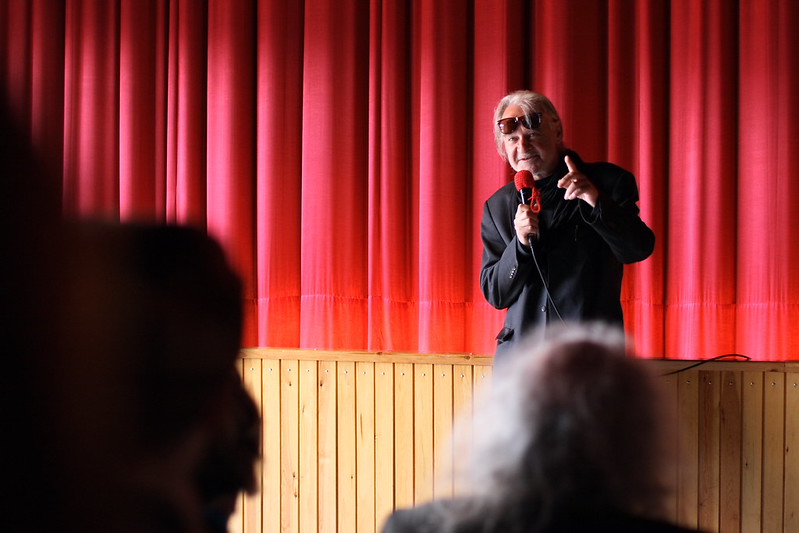
Béla Tarr has died
Although not a political story, it is an important and sad event in Hungary that celebrated arthouse film director Béla Tarr died in the early hours of Tuesday after a long and serious illness, aged 70.
His best-known work is the 1994, seven-and-a-half-hour Sátántangó, regularly ranked by international critics among the greatest films of all time.
Tarr’s long-time collaborator, newly crowned Nobel laureate Krasznahorkai László, bid farewell to his friend in The New York Times: “Béla Tarr was one of the greatest artists of our time. He was unstoppable, brutal and unbreakable. (…) When art loses such a radical creator, for a while everything seems dreadfully boring. Who will be the next rebel? Who will step forward? Who will be the one to smash everything?”
A U-turn in Hungarian-Venezuelan relations
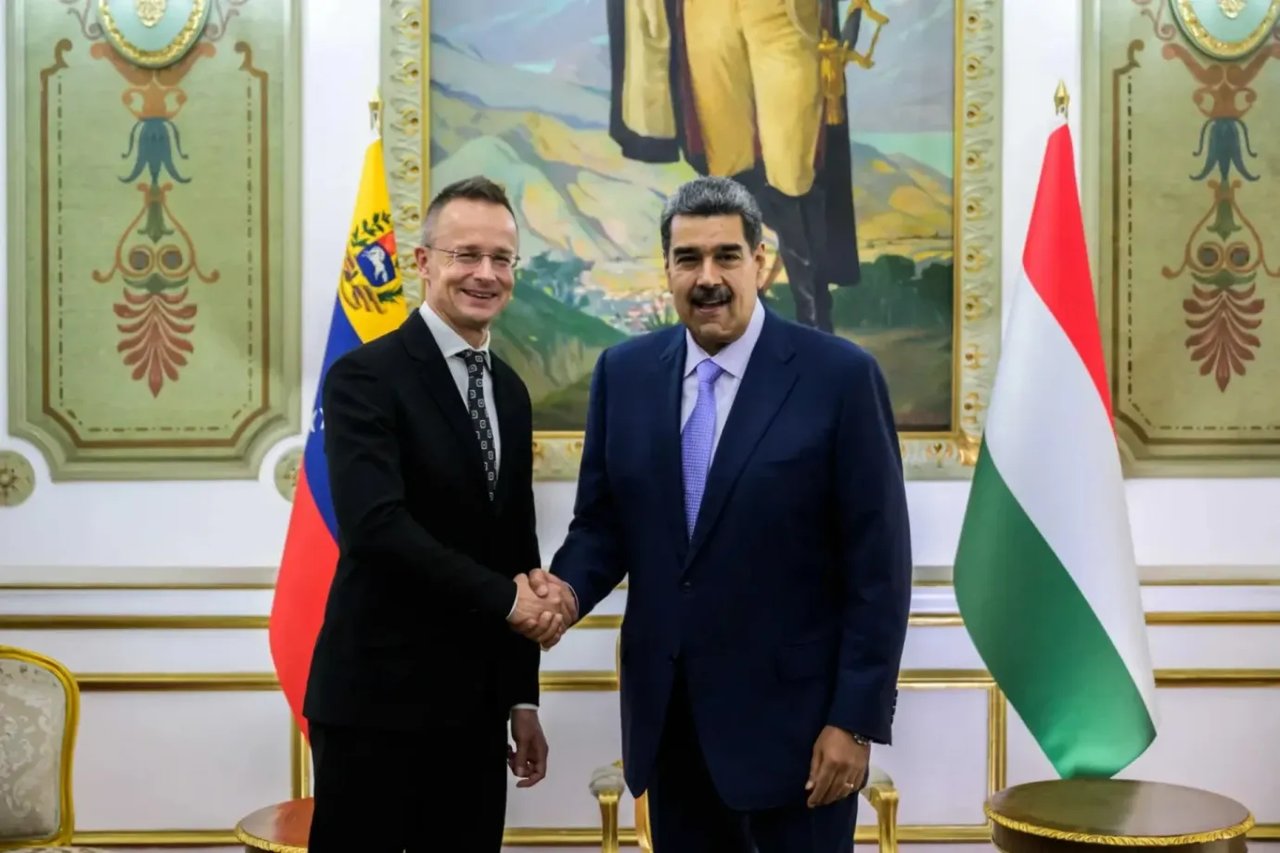
Hungary’s relationship with Venezuela has swung in recent years from humanitarian rescue operations through pragmatic economic outreach to this week's sharp change of course.
While in 2019 the government evacuated hundreds of families of Hungarian origin from what it then described as an “oppressive, communist” dictatorship, by November 2023, foreign minister Péter Szijjártó was already holding talks in Caracas and smiling for photographs alongside Nicolás Maduro.
Despite the friendly tone two years ago, the joint photo opportunities and the classified economic agreements, the Hungarian government's communication took a striking turn after the US dismantling of the Maduro regime.
Orbán framed Maduro’s arrest and the US military action as the first defining manifestation of the “age of nations” he envisages — one in which great-power interests dominate instead of international law and the classic rulebook of liberal democracies.
The Hungarian prime minister said he would not shed a single tear over the fall of a “narco-state” and described the event as explicitly good news for Hungary. According to Orbán, Venezuelan oil reserves coming under US control would significantly increase global supply and push down energy prices.
By contrast, opposition leader Magyar criticised what he called the government’s lack of a moral compass and its spectacular about-face.
He highlighted the contradiction between Szijjártó’s earlier smiling talks and praise of a leftwing dictator and the government’s current pretence that it had always wished for Maduro’s downfall.
Magyar stressed the importance of respecting international law and warned of the dangers of escalation, while also criticising Hungary for being the only member state of the European Union not to sign a joint statement calling for a peaceful solution.
And after all the heavy politics — the week’s dose of cuteness
This is how the polar bear cubs at eastern Hungary’s Nyíregyháza zoo reacted this week when they saw snow for the first time in their lives:
Author Bio
Veronika Munk is an award-winning Hungarian journalist with more than 20 years of experience. She works as director of innovations and new markets at Denník N, the leading independent Slovak news outlet, which also has Czech and Hungarian language versions.
Prior to her current role, Veronika held various senior positions at several other leading Hungarian independent news outlets. She was the founding editor-in-chief of the Hungarian independent online daily news outlet Telex, and before that, she was deputy editor-in-chief at Index, Hungary’s largest online daily news outlet. Veronika has a PhD in media studies and teaches journalism courses at ELTE University, the largest Hungarian university.
Related articles
Tags
Author Bio
Veronika Munk is an award-winning Hungarian journalist with more than 20 years of experience. She works as director of innovations and new markets at Denník N, the leading independent Slovak news outlet, which also has Czech and Hungarian language versions.
Prior to her current role, Veronika held various senior positions at several other leading Hungarian independent news outlets. She was the founding editor-in-chief of the Hungarian independent online daily news outlet Telex, and before that, she was deputy editor-in-chief at Index, Hungary’s largest online daily news outlet. Veronika has a PhD in media studies and teaches journalism courses at ELTE University, the largest Hungarian university.